Introduction
Fitness culture has a solo mythology. The lone athlete grinding before dawn, the solitary figure in the empty gym, the individual committed enough to need no one's help , these images dominate wellness marketing. They are also, according to a substantial and growing body of behavioural science, a poor model for sustainable fitness success.
The evidence is consistent across disciplines: psychology, sociology, exercise science, and behavioural economics all point in the same direction. People who train with social support , whether a workout partner, a group class, an online community, or a team , exercise more frequently, work harder during sessions, sustain habits longer, and report higher enjoyment than those training in social isolation. Community is not a nice addition to a fitness programme. For most people, it is the variable that determines whether the programme survives contact with real life.
The Science of Social Influence on Exercise Behaviour
The relationship between social connection and physical activity is one of the most replicated findings in exercise science. Understanding the mechanisms involved makes it possible to engineer social support deliberately rather than hoping to stumble into it.
The Köhler Effect
The Köhler effect, first documented by German psychologist Otto Köhler in 1926, describes the tendency for weaker members of a group to work harder than they would alone to avoid being the weakest link. Exercise scientist Brandon Irwin and colleagues at Kansas State University applied this principle directly to fitness in a landmark 2012 study. Participants exercising with a partner who appeared slightly more capable than themselves exercised up to 200% longer than those working out alone. The effect was amplified when the partner appeared to be performing well , creating a continuous upward pressure on effort that self-directed motivation rarely produces.
Social Facilitation Theory
Social facilitation theory, originating with Robert Zajonc's work in the 1960s, predicts that the mere presence of others increases arousal , which improves performance on well-practised tasks and impairs performance on novel or complex ones. For established exercise habits and movement patterns, this means training in groups consistently produces a physiological arousal response that pushes effort beyond what solitary training generates, without any explicit social interaction needed at all.
Accountability and Commitment Devices
Behavioural economics research on commitment devices , pre-made decisions that bind future behaviour , demonstrates that social commitments are among the most powerful. The prospect of letting someone else down is psychologically more aversive than simply failing oneself. Pre-committing to training with another person activates this mechanism, creating a motivational force that operates even on mornings when intrinsic motivation is entirely absent. Research by Ariely and colleagues found that social accountability commitments reduced exercise cancellation rates by more than 40% compared to solo commitments.
Social Contagion: Your Network Shapes Your Health
A landmark study by Christakis and Fowler, published in the New England Journal of Medicine, found that health behaviours , including exercise habits and weight changes , spread through social networks up to three degrees of separation. Your friends' friends' friends influence your fitness behaviour. More proximate connections exert the strongest effect. Being in a fitness community is not just motivating , it is epidemiologically protective against sedentary behaviour.
Why Solo Training Fails: The Dropout Data
Solo fitness intentions are notoriously fragile. The January gym membership surge that evaporates by February is not a personal failing , it is a predictable consequence of relying exclusively on individual willpower to sustain a behaviour that competes with dozens of other demands and priorities.
Studies on exercise adherence consistently find that 50% of people who begin a solo exercise programme abandon it within the first 6 months. The dropout rate for group-based exercise programmes is substantially lower , typically 20–30% over the same period. When social accountability structures are explicitly built in (partner check-ins, group challenges, shared tracking), adherence improves further still.
Willpower Depletion
Willpower is a finite cognitive resource that depletes across the day. By evening , when most people plan to train , decision fatigue makes it far easier to skip a solo workout than to cancel on a person or group who is expecting you.
Lack of External Stimulus
Solo training lacks the environmental triggers that group or partner training provides naturally. Without external cues , a scheduled time, a person waiting, a class on the calendar , there is no automatic prompt to initiate the behaviour on low-motivation days.
No Performance Benchmark
Without others to observe and compare against, solo trainers lack the natural upward calibration that social training provides. Over time, comfortable personal standards solidify into plateaus that a training partner or group dynamic would have disrupted.
Absence of Shared Identity
Group membership shapes personal identity. "I'm a member of this running club" is motivationally stronger than "I run sometimes." Social group identity creates a self-concept that exercise maintains , a powerful retention mechanism absent from purely solo training.
No Celebration Loop
Progress without recognition fades quickly as a motivator. Social training provides ongoing acknowledgement of milestones, improvements, and consistency , activating the same social reward circuits that make achievement feel meaningful in other areas of life.
The Psychological Benefits Beyond Adherence
The case for social support in fitness extends well beyond simply showing up more often. Training in community produces psychological and wellbeing benefits that have no solo-training equivalent.
Exercise-Induced Endorphins Are Amplified Socially
The post-exercise endorphin release , responsible for the "runner's high" and the general mood elevation associated with training , is significantly amplified by synchronised social activity. Dunbar et al. at Oxford found that rowers who trained in synchrony with crewmates had significantly higher post-exercise pain thresholds than those rowing solo at the same intensity, indicating a larger endorphin response. The social synchrony, not just the exercise, drives this effect. Group fitness classes, running clubs, and partner training are not just motivationally superior , they are biochemically superior in their effect on mood.
Reduced Exercise-Related Anxiety
Gym intimidation and exercise-related anxiety are significant barriers to initiation and adherence, particularly for beginners. Social belonging within a fitness community reduces these barriers substantially. Knowing other members, having familiar faces at a class, or training with a partner who normalises the experience of struggle and imperfection dramatically lowers the threat appraisal associated with exercise environments that many people find hostile when encountered alone.
Sense of Belonging and Mental Health
Loneliness and social disconnection are now recognised as public health concerns with measurable effects on physical health outcomes equivalent to smoking 15 cigarettes per day (Holt-Lunstad et al., 2015). Regular participation in a fitness community provides an automatic, reliable structure for social connection , particularly valuable for people whose professional and social lives have contracted, as often happens in the 30–50 age bracket. The mental health dividend of community membership is independent of the physical health dividend of exercise itself, making the combined effect substantially greater than either alone.
Exercise + Community: A Compounded Return
A 2019 study published in The Lancet Psychiatry analysed 1.2 million Americans' mental health data against exercise habits. It found that people who exercised had 1.5 fewer "bad mental health days" per month than sedentary people. Those who exercised in team sports and group settings reported 22% fewer bad mental health days than solo exercisers , nearly double the mental health benefit from the same physical activity, attributable to the social component alone.
Types of Social Support and How Each Works
Social support in fitness is not a single mechanism , it operates through several distinct channels, each with different psychological effects and practical applications. Understanding which type of support you currently lack helps identify the most targeted intervention.
Emotional Support
Empathy, encouragement, and shared experience. A training partner who understands the difficulty of a plateau, celebrates a personal record, or acknowledges the psychological challenge of maintaining consistency provides emotional validation that sustains intrinsic motivation through the inevitable dips that all fitness journeys involve. This is typically the most impactful support type for long-term adherence.
Informational Support
Advice, coaching, technique feedback, and shared knowledge. Friends who have navigated similar goals, coaches within a group environment, or community members sharing what has worked for them provides practical guidance that reduces trial and error and accelerates learning. Most people's fitness knowledge expands substantially upon joining a community simply through informal information exchange.
Accountability Support
Commitment check-ins, shared scheduling, and social obligation. The knowledge that someone is tracking whether you showed up , a training partner, a coach who takes attendance, or an online community where absence is noticed , converts the fragile intention to exercise into a social contract. Research consistently identifies accountability as the highest-leverage mechanism for improving exercise adherence among previously inconsistent trainers.
Esteem Support
Recognition, affirmation, and comparative calibration. Being seen to improve, having progress acknowledged, and receiving positive reinforcement from peers activates the social reward pathways that make behaviour intrinsically rewarding rather than effortful. Esteem support reinforces identity as an exerciser , the single most reliable predictor of long-term behavioural maintenance identified in the exercise psychology literature.
How to Build Social Support Around Your Fitness
Meaningful social fitness support rarely assembles itself without intention. For adults with structured professional and personal lives, it typically requires deliberate design. The following strategies are evidence-informed and practically applicable regardless of starting point.
Find an Activity With an Inherent Social Structure
The simplest way to gain social training support is to choose activities that come with one built in. Group fitness classes, team sports leagues, running clubs, CrossFit boxes, cycling groups, and martial arts schools all provide ready-made accountability, regular schedules, and automatic community membership upon joining. The social infrastructure already exists , joining is the only action required. For people who currently train solo, layering one weekly group activity onto an otherwise individual programme is often enough to meaningfully shift adherence dynamics.
Establish a Committed Training Partner
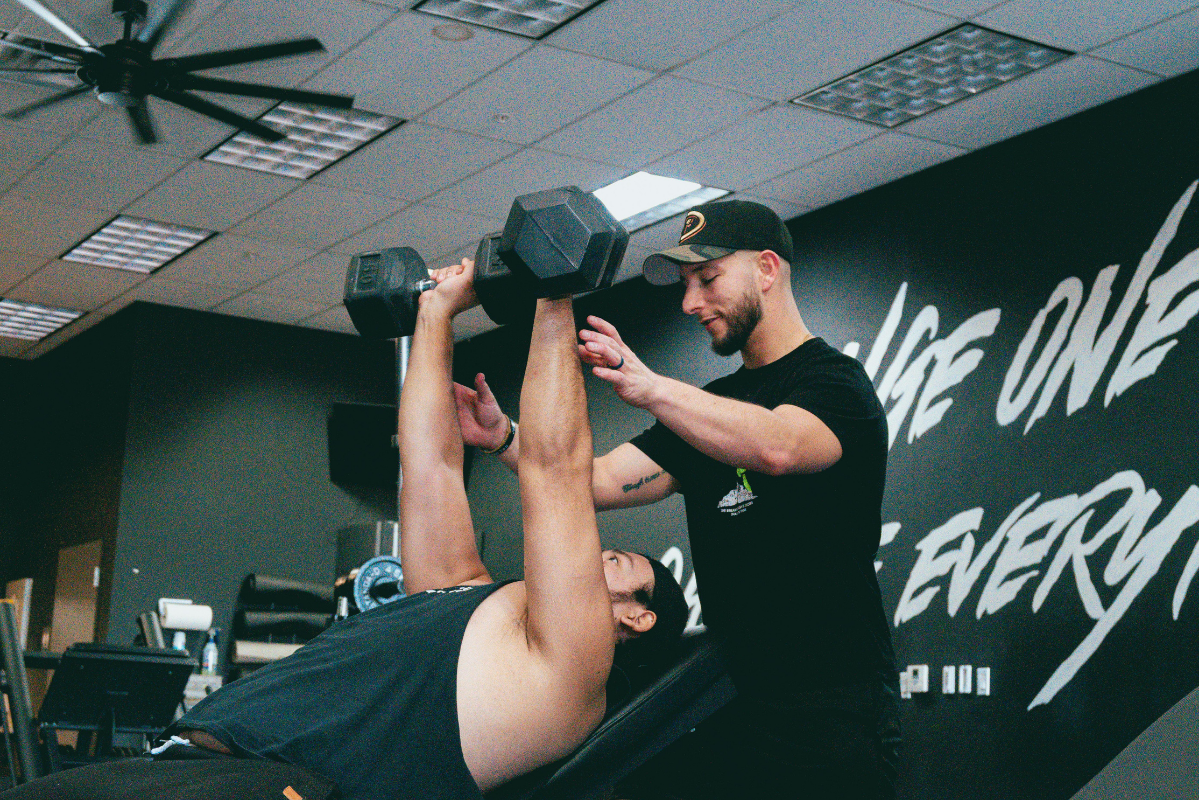
A pre-committed training partner , not an aspirational one, but a specific person with a fixed schedule , is among the most reliable adherence tools available. The most effective pairings share similar goals and training levels, have compatible schedules, and are both willing to hold each other accountable rather than accommodating each other's cancellations. Studies on partner training outcomes show that partners who explicitly discuss expectations about showing up ("we don't cancel on each other") outperform those who treat the arrangement as informal.
Use Digital Communities Strategically
Online fitness communities, when engaged with intentionally rather than passively, provide meaningful social support without geographic constraints. Research by Maher et al. on social media and physical activity found that active participation in online health communities , sharing progress, commenting on others' milestones, joining group challenges , significantly improved adherence compared to passive consumption or no community engagement at all. The key distinction is bidirectional participation: giving support produces as much adherence benefit as receiving it.
Community Inside Your Health Platform
Glewell's community feature connects you with other members sharing similar health goals , so progress shares, workout completions, and nutrition milestones can be celebrated with people who understand what those achievements represent. Accountability and shared motivation built directly into the platform where you already track everything.
Formalise Accountability Structures
Informal social support is better than nothing. Formal accountability structures are significantly better than informal ones. Committing to a weekly check-in with a friend about training consistency, joining a 30-day challenge with explicit tracking, or participating in a group that logs and discusses results converts vague social encouragement into the kind of structured accountability that reliably improves follow-through in behavioural research. The key element is explicit measurement and reporting , not just intention to be supportive.
Involve Family and Home Environment
Research consistently identifies household social environment as one of the strongest modifiers of exercise adherence. Partners, housemates, or family members who are indifferent or subtly discouraging create significant friction against consistent training. Those who actively support , by adapting schedules, expressing genuine interest in progress, or participating themselves , measurably increase adherence. Having a direct conversation about fitness priorities and the kind of support that would be helpful is a high-leverage, underused action that many people avoid unnecessarily.
When Social Dynamics Work Against You
Social influence in fitness is not uniformly positive. Understanding the conditions under which social dynamics undermine rather than support health goals is essential for navigating them effectively.
Negative Social Comparison
Upward social comparison , comparing yourself unfavourably to people further along , motivates when perceived as achievable, but demoralises when perceived as too large a gap. Social media's curated fitness highlight reel creates persistent unrealistic comparisons. Choosing communities where progress is celebrated relative to each individual's starting point counters this effectively.
Social Facilitation of Poor Habits
The contagion effect works in both directions. Social networks that normalise sedentary behaviour, frequent alcohol consumption, or consistently poor nutritional choices exert measurable downward pressure on individual health outcomes. This is not cause to abandon social connections but to be intentional about which health communities you additionally choose to participate in.
Partner Training Mismatches
Training with a partner whose goals, fitness level, or schedule are significantly misaligned creates friction that eventually ends the arrangement. Poorly matched partners also create training quality issues , one person consistently working too far below or above their appropriate intensity. Compatibility assessment before committing saves both parties the disruption of a later breakdown.
Toxic Fitness Culture
Some fitness communities build identity around extremes , excessive volume, extreme dieting approaches, shaming of rest days, or unhealthy competitive dynamics. These environments can drive short-term intensity at the cost of long-term physical and psychological wellbeing. Evaluating the underlying values of a community before deep investment protects against this.
Social Pressure to Perform
While accountability is a powerful motivator, it can backfire when it creates a sense of obligation rather than support. Feeling like you "have to" show up for others can create resentment and reduce intrinsic motivation. The best social support feels like an opportunity to connect and improve together, not a burden to meet external expectations.
Social Pressure vs. Social Support
- Social support increases intrinsic motivation and makes exercise feel more rewarding , it leads to durable, self-sustaining habits
- Social pressure is externally imposed obligation , it can drive short-term behaviour but typically creates resentment and eventual rebellion against the habit
- The distinction matters: choose communities and partners that make you want to train, not ones that make you feel judged for your current state
- The best fitness community is one where showing up imperfectly is celebrated more than not showing up at all
Building a Personal Social Fitness Strategy
Translating the research into a personal action plan requires an honest audit of the social dimension of your current training life and a clear intention about how to improve it. The following framework provides a starting structure.
Step 1: Audit Your Current Position
Identify which types of social support you currently have (emotional, informational, accountability, esteem, tangible) and which are absent. Note whether you have any training partner, any group context, any community where your progress is visible. Most people discover that accountability and esteem support are the primary gaps. Identify one specific person and one specific context that could address each gap.
Step 2: Make One Social Commitment
Behaviour change research consistently shows that targeting one change at a time produces four times better outcomes than attempting multiple changes simultaneously. Choose the single highest-leverage social support addition available to you , most often, a committed weekly training partner or a fixed group activity , and commit to it for a minimum of six weeks before evaluating. Six weeks is the minimum required for a new social training arrangement to become habitual.
Step 3: Add a Digital Accountability Layer
Regardless of whether in-person social training is accessible, a digital accountability layer costs nothing and adds meaningfully. Sharing a weekly workout summary with a friend, participating in a challenge within a health app community, or simply making progress visible to others who care about it activates the same accountability mechanisms as physical community , scaled to the level of engagement you are able to maintain.
Step 4: Review and Reinvest
After six weeks, review the impact honestly. Has consistency improved? Has motivation on low-energy days been easier to overcome? Has training quality changed? If results are positive, consider whether there is a further social layer worth adding. If the arrangement has not worked, identify the misalignment (wrong partner, wrong format, wrong context) and adjust rather than reverting to isolation.
The Long Game: Community as the Foundation of Lasting Health
The fitness industry's obsession with optimising programmes, macros, periodisation, and supplementation creates the impression that the route to sustainable health is primarily technical. The behavioural literature tells a different story. The most consistently cited predictor of long-term exercise adherence in large-scale population studies is not programme quality , it is social integration into a health-supporting community.
People who are embedded in fitness communities exercise for decades without requiring periodic re-motivation campaigns. The habit is self-sustaining because it is socially embedded , bound up with identity, relationships, and belonging in ways that make discontinuation more costly than continuation. That is the long-term target: not finding the perfect programme to follow, but building the social context in which consistent, health-supporting behaviour is the natural, automatic default.
The solo training mythology is not wrong , individual discipline matters. But discipline is a force best applied to systems and structures that reduce the need for it. Building community around your health goals reduces the willpower cost of every subsequent session and replaces it with something far more durable: genuine connection and shared purpose.
Train With People Who Get It
Glewell's community connects you with members sharing your health goals , so your progress is visible, your milestones are celebrated, and your consistency is supported by people who understand what sustainable health actually looks like.
Join the Glewell Community