Introduction
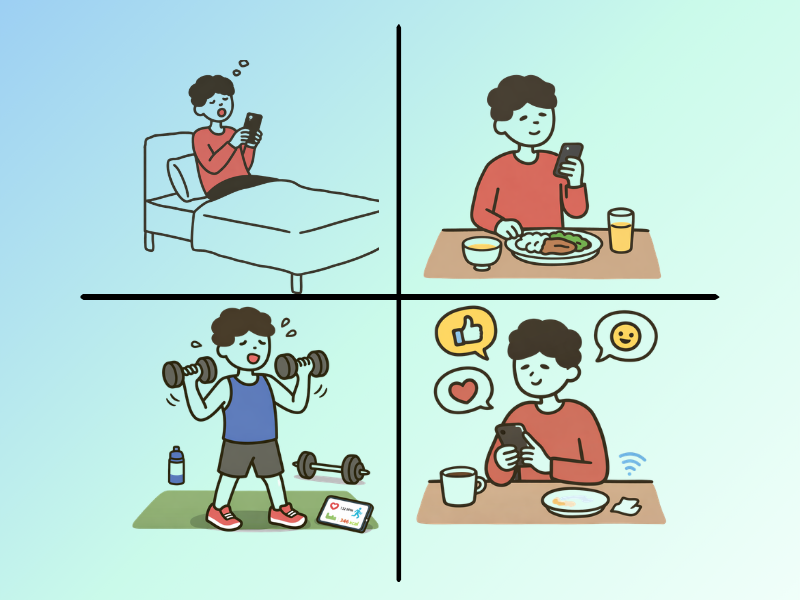
The average person spends 4–6 hours daily on their smartphone, checking it 58–96 times per day. Add laptops, tablets, and streaming devices, and total screen time climbs to 7–11 hours for many adults. This isn't just a time management problem , it's a cognitive hijacking that affects attention span, sleep quality, mental health, productivity, and relationships.
Digital technology has undeniable benefits, but unchecked use creates a state of perpetual partial attention where you're constantly distracted, never fully present, and always reachable. Your nervous system remains in low-grade activation, preventing the deep rest and recovery required for physical and mental health.
A digital detox isn't about abandoning technology entirely , it's about establishing intentional boundaries that restore your attention, energy, and time. This guide provides evidence-based strategies to reduce digital overload, reclaim mental clarity, and reconnect with what matters most.
The Hidden Costs of Digital Overload
The damage from excessive screen time extends far beyond wasted hours. Chronic digital engagement creates cascading effects across multiple dimensions of health and performance.
Sleep Disruption
Blue light from screens suppresses melatonin production. Evening screen use delays sleep onset by 30–60 minutes and reduces REM sleep, impairing memory consolidation and emotional regulation.
Mental Health Impact
Studies link heavy social media use to increased anxiety, depression, and loneliness. The constant comparison cycle and fear of missing out (FOMO) trigger chronic stress responses.
Relationship Deterioration
Phubbing (phone snubbing) , ignoring someone to check your phone , reduces relationship satisfaction and trust. Partners report feeling less valued when screens dominate interactions.
Productivity Loss
Each interruption from notifications requires 23 minutes on average to refocus on the original task. If you're interrupted every 15 minutes, you never reach deep work.
Physical Health Effects
Digital eye strain, "tech neck" posture problems, and sedentary behavior from prolonged screen use contribute to chronic pain, headaches, and reduced physical activity.
Why Digital Detox Is So Difficult
If screen overuse is so harmful, why can't people just stop? The answer lies in how apps and platforms are engineered to exploit psychological vulnerabilities and create dependency.
Variable Reward Schedules
Social media apps use the same psychological mechanism as slot machines: variable ratio reinforcement. You don't know when you'll get a like, comment, or interesting post , so you keep checking. This unpredictability triggers dopamine release, creating addictive behavior patterns stronger than predictable rewards.
Infinite Scroll Design
Platforms eliminate natural stopping cues. Before social media feeds, you finished reading a newspaper or magazine and had a clear endpoint. Now, content refreshes infinitely, removing psychological closure and encouraging endless consumption.
FOMO and Social Validation
Humans are wired for social connection and status awareness. Notifications tap into our fear of exclusion and our need for validation. Each alert suggests something important is happening without you, triggering anxiety that can only be relieved by checking , creating a self-perpetuating cycle.
Ease of Access
Your phone is always within arm's reach. The friction between impulse and action is nearly zero. Before smartphones, boredom was just boredom. Now, every idle moment triggers the impulse to reach for your device.
You're Not Weak , The Apps Are Engineered
Tech companies employ neuroscientists, behavioral psychologists, and UX experts specifically to make apps as "sticky" as possible. Billions of dollars are invested in keeping you engaged. Your difficulty disconnecting is not a personal failing , it's evidence of sophisticated behavioral engineering.
Assessing Your Digital Dependency
Before implementing changes, establish your baseline. Most people dramatically underestimate their screen time. Use built-in tracking tools (Screen Time on iOS, Digital Wellbeing on Android) for one week to measure:
- Total daily screen time: How many hours per day across all devices?
- Pickups per day: How often do you unlock your phone?
- App breakdown: Which apps consume the most time?
- First check after waking: How long do you wait before checking your phone?
- Last check before sleep: Are you scrolling in bed?
- Interruption frequency: How often do notifications pull your attention?
The Reality Check
If you spend 5 hours daily on your phone, that's 1,825 hours per year , equivalent to 76 full days. Over a decade, that's more than 2 years of waking life spent staring at a screen. Seeing the numbers often provides the motivation to change.
The Digital Detox Framework
Effective digital detox requires systemic changes across environment, behavior, and technology settings. The following framework progresses from foundational changes to advanced optimization.
Level 1: Environmental Restructuring (Week 1)
Change your physical environment to increase friction between impulse and action.
Remove Phone from Bedroom
Buy an alarm clock. Charge your phone in another room. This single change eliminates bedtime scrolling and morning phone checking , two high-impact habits.
Create Phone-Free Zones
Designate spaces where phones are not allowed: dining table, bedroom, car (unless navigation is needed). Use a charging station in a central location.
Use Physical Barriers
Keep your phone in a drawer, bag, or another room during focused work. The 10-second delay to retrieve it eliminates 80% of mindless checking.
Remove Apps from Home Screen
Delete social media, news, and entertainment apps from your home screen. Keep only utilities (maps, banking, calendar). Require the app library search to access time-wasting apps.
Level 2: Notification Management (Week 2)
Eliminate interruptions to restore continuous attention.
- Disable all non-essential notifications: Only calls, texts from key contacts, and critical work apps should interrupt you
- Turn off badges: Red notification dots trigger compulsive checking
- Use Do Not Disturb: Schedule automatic DND during sleep, meals, and deep work blocks
- Disable email push: Check email at designated times (9 AM, 1 PM, 4 PM) instead of being alerted constantly
- Silence group chats: Mute all group messages except truly urgent channels
Level 3: Usage Limits and Time Blocking (Week 3)
Set explicit boundaries on when and how long you use specific apps.
- App time limits: Use Screen Time or Digital Wellbeing to set 15–30 minute daily limits on social media and entertainment apps
- Scheduled checking: Batch social media checking to 2–3 designated times per day (e.g., 12 PM, 5 PM, 8 PM) for 15 minutes each
- No screens before 8 AM: Start your day without digital input to preserve morning clarity
- No screens after 9 PM: Create a 1-hour buffer before bed to allow melatonin production
- Phone-free meals: No devices during breakfast, lunch, or dinner
Level 4: Replacement Habits (Week 4)
Fill the void left by reduced screen time with intentional activities.
Deep Reading
Physical books or e-readers (in airplane mode) for 30–60 minutes daily. This trains sustained attention and reduces screen dependence.
Phone-Free Walks
Daily 20–30 minute walks without phone or music. Let your mind wander. This restores boredom tolerance and mental clarity.
In-Person Socializing
Replace social media interaction with face-to-face conversations. Schedule weekly coffee or dinner with friends , phones away.
Analog Hobbies
Pursue activities incompatible with phone use: cooking, drawing, woodworking, gardening, playing instruments, board games.
Physical Activity
Exercise sessions where your phone is in a locker or left at home. Focus entirely on movement and physical sensation.
The Weekend Digital Detox
For a more intensive reset, try a 48-hour weekend detox once per month. This provides a concentrated break from digital noise and serves as a regular practice to maintain boundaries.
Friday Evening Preparation
- Set auto-reply on email: "I'm offline until Monday. For urgent matters, call [number]."
- Notify close friends/family you'll be unreachable except by phone call
- Turn off all notifications or enable extreme Do Not Disturb (calls only)
- Delete social media apps temporarily (you can reinstall Monday)
- Plan 2–3 meaningful activities for the weekend (hike, museum visit, cooking project)
Saturday & Sunday Protocol
- Phone purpose: Calls, maps, and camera only , no browsing or apps
- Computer use: Only for planned creative projects (writing, photo editing) , no email or social media
- TV/streaming: One intentional movie or show maximum per day
- Focus on: Physical activity, face-to-face connection, nature, reading, hobbies, rest
The Rebound Effect
After a 48-hour detox, Monday's return to normal digital life often feels jarring. Use this heightened awareness to identify which apps and behaviors you genuinely missed versus which you engaged with purely out of habit. Keep the useful, cut the habitual.
Strategic Technology Use
Digital detox doesn't mean becoming a Luddite. It means using technology intentionally rather than reactively. Apply these principles to remain digitally engaged without being digitally dominated.
The Intentionality Test
Before opening any app, pause and ask: "Why am I opening this right now? What specific thing am I looking for?" If you can't articulate a clear purpose in one sentence, don't open it. This eliminates 70% of mindless usage.
Friction as a Feature
Make positive technology use easy and negative use difficult. Keep productivity apps on the home screen. Bury time-wasting apps in folders. Use app blockers (Freedom, Cold Turkey, Focus) during work hours. Enable grayscale mode to make your phone less visually appealing.
Separate Devices for Separate Functions
If possible, use different devices for work and leisure. A dedicated work laptop (with no entertainment apps) and a personal device keeps boundaries clear. E-readers for books prevent the temptation to check notifications while reading.
Consolidate Communication Channels
The more messaging apps you use, the more fragmented your attention. Choose 1–2 primary channels (text + one app) and direct everyone there. Delete or silence the rest. Reduce the number of places you need to check.
Technology Should Serve You
If you find yourself serving your devices , feeling obligated to respond immediately, checking compulsively, adjusting your life to accommodate notifications , the relationship is inverted. Boundaries restore the proper hierarchy: you decide when and how technology enters your life.
Social Media: Quit, Limit, or Optimize?
Social media drives the majority of problematic screen time. You have three strategic options, each with different tradeoffs.
Option 1: Full Deletion (Extreme)
Best for: People who recognize social media provides no meaningful value to their life.
Implementation: Delete all accounts and apps. Communicate with friends via text, email, or phone. Accept that you'll miss some social updates.
Expected outcome: Immediate 2–4 hour daily time reclamation, reduced anxiety, improved focus, initial FOMO that fades within 2–3 weeks.
Option 2: Severe Limitation (Moderate)
Best for: People who gain some value from social media but recognize it's out of balance.
Implementation: Delete apps from phone. Access only via desktop browser for 15 minutes, 2–3 times per week. Use browser extensions (News Feed Eradicator) to remove infinite scroll.
Expected outcome: 1.5–3 hour daily time reclamation, maintained connection with key people, elimination of compulsive checking.
Option 3: Tactical Optimization (Minimal)
Best for: People whose work requires social media presence or who derive significant value from specific communities.
Implementation: Set 30-minute daily app limits, disable notifications, unfollow/mute aggressively (only keep accounts that provide genuine value), schedule posts with tools to avoid opening apps, use "Following" instead of algorithmic feeds.
Expected outcome: 1–2 hour daily time reclamation, curated higher-quality feed, reduced triggering content, maintained presence.
The 30-Day Experiment
Unsure which option is right? Try full deletion for 30 days as an experiment. You can always reactivate accounts. Most people who commit to 30 days choose not to return , the benefits become too obvious to give up.
Measuring Success Beyond Screen Time
While reduced screen time is a useful proxy, the real measures of successful digital detox are qualitative improvements in life quality.
Sleep Quality
Are you falling asleep faster? Waking more rested? Sleeping straight through the night without waking to check notifications?
Mental Calm
Do you feel less anxious? Less FOMO? More present in conversations? Less compulsion to fill every idle moment?
Relationship Quality
Are you more present with family and friends? Having deeper conversations? Making more eye contact?
Productivity
Are you completing deep work? Making progress on meaningful projects? Feeling more accomplished at day's end?
Physical Health
Moving more? Fewer headaches and neck pain? Better posture? More energy throughout the day?
Track these qualitative markers weekly. If you're improving across multiple dimensions, your digital detox is working , regardless of whether screen time dropped from 5 hours to 2 hours or 3 hours to 1.5 hours.
Maintaining Long-Term Balance
Digital detox isn't a one-time event , it's an ongoing practice. Without maintenance systems, old patterns creep back within weeks or months.
Weekly Digital Audit
Every Sunday evening, review your screen time data for the week. Ask yourself:
- Which apps consumed the most time? Do they align with my values?
- How many times did I check my phone? Is that number trending up or down?
- Did I honor my phone-free zones and times?
- What will I do differently this coming week?
Monthly Deep Detox
Schedule a 48-hour digital detox weekend once per month. This regular reset prevents boundaries from eroding and provides a consistent practice of intentional disconnection.
Annual Tech Inventory
Once per year (ideally January), conduct a full technology audit:
- Delete unused apps and accounts
- Review all app permissions and revoke unnecessary access
- Update notification settings as life changes
- Re-establish boundaries that may have weakened
- Reflect on whether your technology use serves your goals
The Boundary Erosion Pattern
Expect your boundaries to weaken over time , this is normal. A work emergency requires checking email on vacation. A friend insists on a group chat app you'd deleted. New apps launch that seem useful. The key is recognizing erosion early and deliberately resetting before complete reversion to old patterns.
Digital Wellness Without Hypocrisy
Many wellness apps ironically contribute to screen time while claiming to improve it. The solution is choosing platforms that consolidate functionality instead of fragmenting attention across multiple apps.
If you're using a fitness tracking app, a nutrition app, a meditation app, a sleep app, and a habit tracker, you're checking five different apps daily , adding screen time while pursuing health. Unified platforms eliminate this contradiction.
Glewell's Minimal-Screen Approach
Glewell consolidates nutrition tracking, fitness logging, sleep monitoring, and habit tracking into one quick-entry dashboard. Log meals in seconds, track workouts efficiently, and review progress in a unified view , then close the app and live your life. Health tracking should support wellness, not replace it with more screen time.
Conclusion
Digital technology is neither inherently good nor bad , it's a tool that can serve or dominate you depending on how you structure the relationship. Left unchecked, algorithms designed to maximize engagement will consume every available moment of attention. Intentional boundaries restore your autonomy.
A successful digital detox doesn't require abandoning technology. It requires clarity about what you value , time with loved ones, meaningful work, physical health, mental calm, creative pursuits , and the discipline to protect those priorities from digital encroachment.
Start with one change this week. Remove your phone from the bedroom. Turn off all non-essential notifications. Take one phone-free walk. The path from digital overwhelm to digital balance is built one small boundary at a time.
Your attention is your most valuable resource. Reclaim it.
Track Health, Not Screens
Glewell provides fast-entry health tracking so you spend less time in apps and more time living. Log nutrition, workouts, and habits in seconds , then get back to what matters.
Try Glewell